



Table of Contents
Who Is Estevanico?
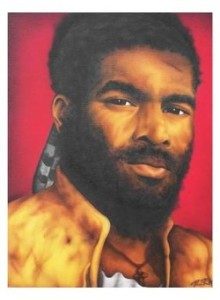
Estevanico, also known as Estebanico or Mustafa Azemmouri, was a 16th-century figure of African origin whose legacy is closely tied to early exploration and interpretation in the Americas. Born in Azemmour, Morocco, he is remembered not only as an explorer but also as an early cultural and linguistic intermediary. His ability to communicate across language barriers allowed him to navigate unfamiliar societies and build connections between Spanish expeditions and Indigenous communities. Today, Estevanico stands as an early example of how interpretation and cultural understanding shaped historic encounters long before formal interpreting professions existed.
Estevanico Facts
-
One of the first non-Indigenous people to explore large parts of North America.
-
Played a crucial role in the Narváez expedition.
-
Participated in the search for the legendary Seven Cities of Cíbola.
-
Celebrated for his resilience, ingenuity, and cross-cultural diplomacy.
-
Served as an early example of how interpretation and cultural understanding shaped historic encounters.
Estevanico’s Journey with the Narváez Expedition
In 1527, Estevanico joined Dorantes on the ill-fated Narváez expedition to Florida. Who was Estevanico? He was more than a servant—his ability to learn languages like Spanish, Portuguese, and Native American dialects would soon prove essential. The Pánfilo de Narváez expedition started with around 600 men but faced brutal storms, disease, and attacks. Eventually, only four survivors remained, including Estevanico. This period marked the beginning of Estevanico’s exploration and the start of his rise as a renowned figure in American history.
Estevanico’s Role in the Exploration of Florida
The survivors, including Estevanico, wandered for years across modern-day Texas, New Mexico, and Northern Mexico. Estevanico’s role in the exploration of Florida and later regions was crucial. His ability to communicate with Native American tribes often determined the group’s survival. What did Estevanico discover? He mapped unknown territories, identified safe paths, and established contact with various tribes, helping bridge two vastly different worlds. His story also reflects the early African presence in New World exploration.
Survival and Estevanico’s Skills as an Interpreter
During their arduous journey, Estevanico’s talents grew. As a historical interpreter, he learned at least six Native American languages, including languages of the Zuni and Pueblo peoples. He was the voice between cultures, negotiating food, shelter, and safe passage. His communication skills were so advanced that he could mediate between hostile groups, often calming tensions. Estevanico’s survival depended on his ability to adapt linguistically and culturally, a trait that truly defined his accomplishments.
Estevanico the Moor as a Diplomat and Healer
Estevanico became revered not just for his interpretation skills but also as a healer and diplomat. He carried a sacred gourd adorned with feathers, symbolizing his healing powers among Native Americans. This elevated him to a mystical status during his travels. Estevanico’s accomplishments went beyond exploration—he built trust where others could not. By the time the group reached a Spanish settlement in Sonora, Mexico, Estevanico was already a legend. His story is central to understanding the early contact between Africa and the Americas.
How Did Estevanico Die and What was famous for?
Estevanico died in 1539 while serving as a scout and cultural intermediary during an expedition searching for the legendary Seven Cities of Cíbola, a region believed by the Spanish to be rich in gold and wealth. He was sent ahead by Fray Marcos de Niza to make early contact with Indigenous communities in what is now the American Southwest, near the Zuni village of Hawikuh. Historical accounts suggest that Estevanico’s arrival created tension due to cultural misunderstandings, expectations of gifts, or fears linked to foreign intrusion fueled by rumors of the “City of Gold.” These tensions ultimately led to his death at Hawikuh, marking one of the earliest recorded fatalities tied to European quests for Cíbola. His death later cast doubt on exaggerated reports of golden cities and influenced how future Spanish expeditions approached the region. Estevanico’s fate highlights the dangers faced by early interpreters, whose roles placed them at the intersection of ambition, myth, and fragile cross-cultural encounters.
Estevanico’s History as an Explorer and Cultural Bridge
Why is Estevanico important?
Estevanico was the first recorded African and among the first non-Indigenous people to explore large parts of what is now the United States. His journey represents resilience, ingenuity, and cultural diplomacy, highlighting his ability to navigate unfamiliar lands and connect diverse communities. His exploration route spanned Florida, Texas, New Mexico, and Arizona, leaving a lasting mark on how future expeditions were planned and conducted. Estevanico’s life bridged continents, cultures, and eras, earning him a permanent place in the story of early America. Today, Estevanico the Moor is celebrated not just as a formerly enslaved man but as a pioneering explorer and cultural intermediary whose contributions helped shape the course of North American exploration.
Frequently Asked Questions about Estevanico
Q1: Who is Estevanico?
A1: A 16th-century African explorer and interpreter who helped Spanish expeditions in North America.
Q2: How did Estevanico die?
A2: He was killed in 1539 near the Zuni village of Hawikuh during the search for Cíbola.
Q3: What was Estevanico famous for?
A3: Being a pioneering African explorer and interpreter who bridged cultures in early America.
Q4: What did Estevanico do?
A4: Guided Spanish explorers and served as a linguistic and cultural intermediary with Indigenous peoples.
Related: Another Famous Linguist: El Inca Garcilaso dela Vega (1539-1616)