



Table of Contents
Key Points
- Language processing in the brain begins when sound enters the auditory system
- Multiple brain regions work together to decode and understand speech
- Incoming sounds are transformed into electrical signals for interpretation
- Broca’s and Wernicke’s areas play a key role in language comprehension
- Brain language processing relies on timing, memory, and sensory integration
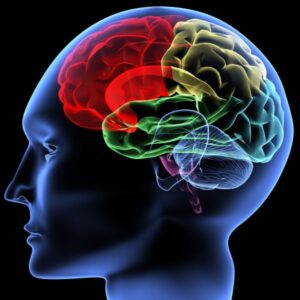
The brain is the most complex structure in the human body, and language processing is one of its most remarkable abilities. Neurologists and linguists continue to study how the brain processes language, from the moment sound enters the ear to the point where meaning is fully understood. Understanding language processing in the brain helps explain how humans communicate, learn languages, and interpret spoken words in real time.
The Initial Transmission and the Brain’s Language Processing
When speech sounds reach the ear, they travel through the auditory canal to the cochlea. Inside the cochlea, sound waves stimulate tiny hair cells that convert vibrations into electrical signals. These signals move through the auditory nerve, marking the first stage of brain language processing and answering the question of which part of the brain processes incoming sounds and recognizes them as language.
First-Level Processing in the Brain
The electrical signals arrive at the cochlear nuclei in the brainstem. At this stage, the brain performs basic sound analysis, identifying frequency and intensity. This step is essential for understanding how the brain translates language and how raw sound becomes structured input that the brain can interpret.
The Role of the Brainstem in Language Processing
The brainstem acts as a gateway, ensuring that only relevant auditory information moves forward for higher-level processing. This early filtering supports efficient process language mechanisms before conscious understanding occurs.
Binaural Integration & Audio-Visual Integration
Next, sound signals reach the superior olivary complex, where information from both ears is combined. This allows the brain to locate sound sources and integrate auditory input with visual cues. This stage explains where language is processed in the brain beyond simple hearing and highlights the collaboration between sensory systems.
Relative Timing in the Brain’s Language Processing Journey
The medial geniculate nucleus analyzes differences in sound timing and intensity. These details help the brain predict speech patterns and prepare for comprehension. Even when we are only listening, motor neurons related to speech are activated, showing how deeply connected listening and speaking are in language processing in the brain.
Why Timing Matters in Language Understanding
Accurate timing allows the brain to separate syllables, recognize words, and maintain speech rhythm, all of which are critical for fluent comprehension.
Related: Simultaneous Interpretation and the Brain
Speech Perception and the Language Center of the Brain
The final stage occurs in the auditory cortex, where all auditory data is assembled and matched with stored linguistic knowledge. This is the point at which sound becomes meaning. Key language areas, including Broca’s area and Wernicke’s area, are activated, answering what part of the brain controls language processing and how comprehension and production work together.
Related: The Human Brain and Language – Use of Brainpower!
The Fascinating Nature of the Brain’s Language Processing System
The ability to understand language from abstract sounds demonstrates the sophistication of the human brain. Studying how does the brain process language provides valuable insight into neurolinguistics, language learning, and communication disorders.
Key functions involved in brain language processing include:
- Sound decoding and recognition
- Memory-based word matching
- Meaning construction and interpretation
FAQs:
What are the 7 stages of language?
They include sound reception, signal conversion, early processing, integration, timing analysis, comprehension, and meaning production.
What is the process of language processing?
Language processing involves converting sound into electrical signals, analyzing them, and matching them with stored linguistic knowledge.
What are the 5 steps of natural language processing?
Input reception, preprocessing, feature extraction, interpretation, and response generation.
What part of the brain controls language processing?
Broca’s area, Wernicke’s area, the auditory cortex, and supporting neural networks work together to control language processing.
Call to Action
Understanding how language is processed in the brain highlights the complexity behind effective communication. At Translation Excellence, we apply this understanding through professional translation and interpretation services that respect linguistic accuracy and cognitive precision.
What do you think is the most interesting or impressive part of this process?
____________________________________________________________________